
Language That Conceals Killing
The Zone of InterestThis thread follows euphemisms, bureaucratic phrasing, and deliberate lies as tools that make mass violence administratively manageable.
increasing Bearing strength in each event
 decreasing
Bearing strength in each eventdecreasingProtection as a Name

Protection as a Name
A false vocabulary of care
The regime calls its arrests Protective Custody, framing imprisonment as protection. The phrase makes state violence sound like a service offered to its victims.
Words reshape responsibility
The euphemism encourages officials to describe coercion without naming it. It also helps perpetrators treat themselves as administrators rather than agents of violence.
The Resettlement Speech
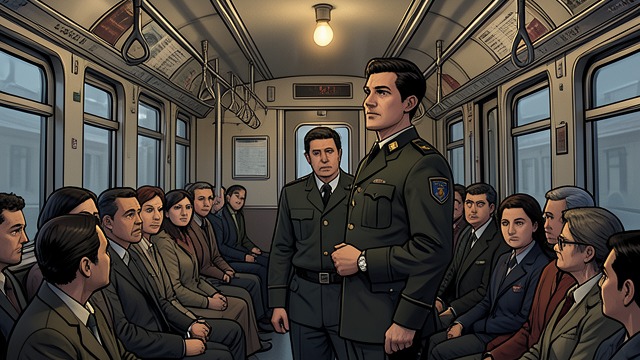
The Resettlement Speech
A promise of work and shelter
Paul Doll tells arriving passengers that they will recover, work on farms, and receive food and beds. His friendly speech is deliberately false and designed to keep the group moving.
Deception organizes the killing
The lie is not incidental to the process. It provides the calm and order required to send people toward death without an immediate revolt.
Administrative Euphemisms
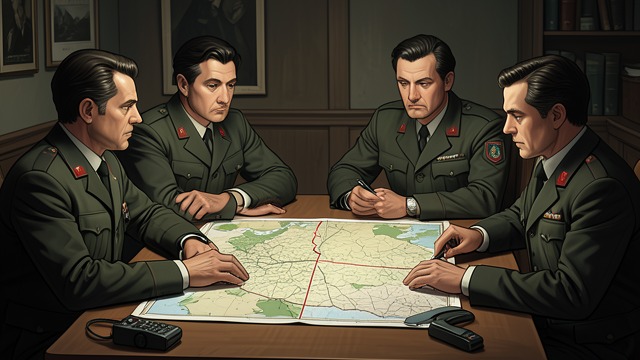
Administrative Euphemisms
Murder becomes an objective
Officials discuss evacuation, labor capacity, and disposal as matters of policy. Their language obscures the difference between forced labor, deportation, and killing.
Distance enables participation
The terms allow administrators to take part without describing the people affected. The distance is rhetorical, but it helps sustain a system whose physical violence is immediate.
The Formula of Escape

The Formula of Escape
A phrase covers a death
The record says Dieter Kruger was shot while trying to escape. Thomsen recognizes that the formula conceals many possible forms of killing and torture.
Official language erases the victim
The phrase turns murder into routine procedure. Learning what happened to Kruger gives Thomsen a clearer account, but does not repair the silence imposed on the dead.
The Lie No Longer Holds

The Lie No Longer Holds
Deportees infer the truth
As transports continue and nobody returns, arrivals increasingly resist the camp’s promises. Panic spreads before officials can complete the selection.
Concealment reaches its limit
The operators still use deception, but the evidence has accumulated beyond what their language can hide. The scene shows that euphemism can delay recognition, not abolish it.
Early in the camp narrative
August 1942, at the arrival of Special Train 105
Autumn 1942, during policy discussions
After Kruger’s execution, revealed in winter 1942–43
Winter 1942–43, as transports become harder to control
